Growth is expensive when your leadership system can’t carry the weight
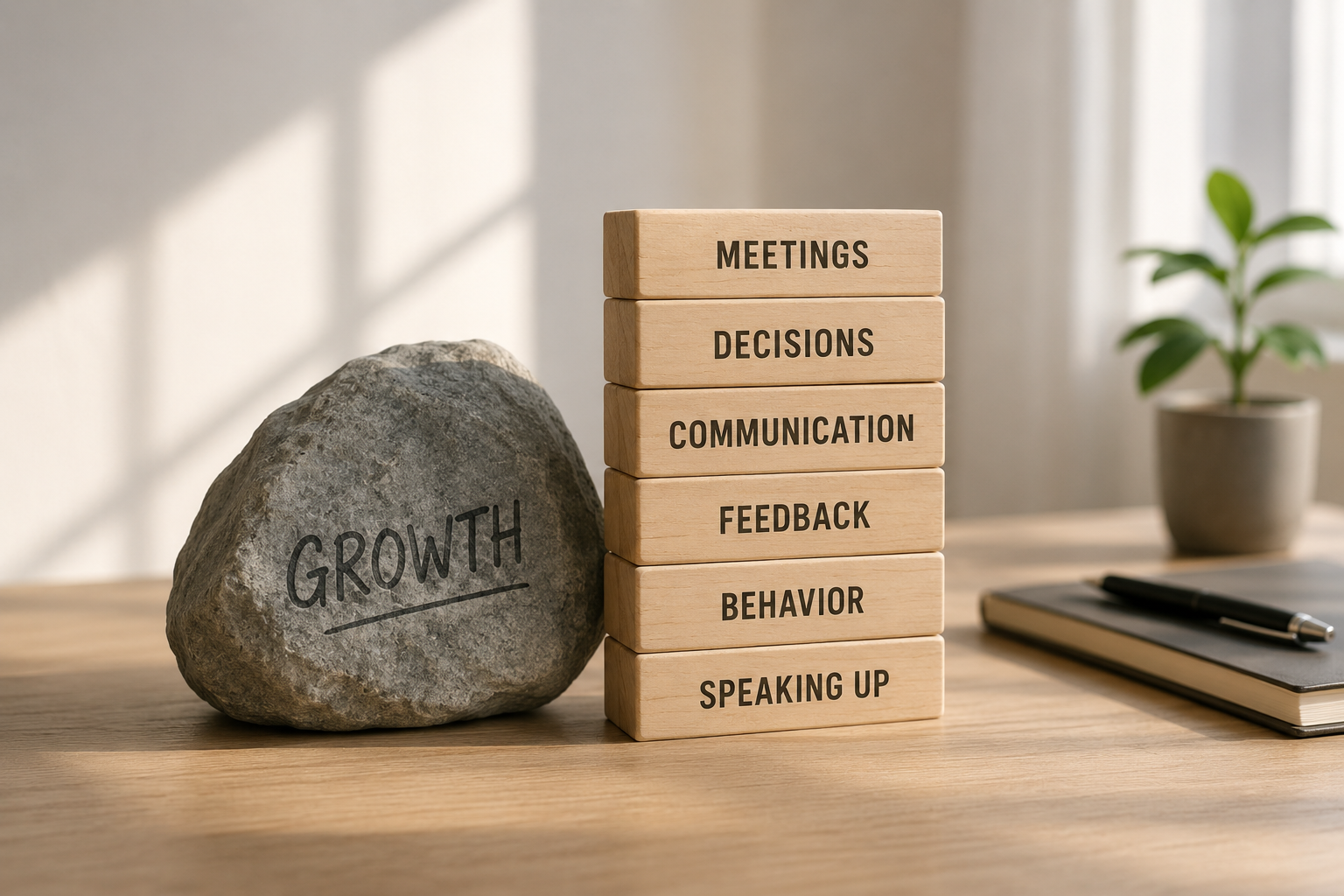
Growth asks more of a leadership team than most companies plan for.
The work comes in, and the pace picks up. Clients want more. The board wants movement. The firm finally has the kind of momentum its leaders have been chasing.
Then the expensive part starts to show up. The senior team spends more time in meetings, yet fewer decisions seem to stick. Managers wait for direction because ownership is fuzzy. Feedback gets delayed because everyone is moving fast and no one wants to slow the train for a hard conversation.
Growth has a way of finding every loose bolt in the leadership system.
A decision gets reopened after three meetings. A senior leader solves a problem that a manager should own. A partner avoids direct feedback, then complains that the associate “still doesn’t get it.” The leadership team agrees in the room and quietly translates the decision four different ways.
Tiny leaks.
Very expensive leaks.
Every leadership team has an operating system
You can see it in how the work actually gets done.
Who really makes the final call? How much disagreement can the room handle? Which behaviors get addressed? Who gets a pass? Does the real conversation happen in the meeting, or afterward with the two people everyone knew would end up talking?
When a company is smaller, informal workarounds can carry a surprising amount of weight. You know who to text. You know who really decides. You know which behavior everyone works around because “that’s just how she is.” You know which leader will jump in and rescue the work.
That approach has a shelf life.
As the business grows, the work spreads across more people, clients, priorities, and handoffs. The leadership team needs a clearer way for work to move.
That is why I built the Trusted Leadership Operating System.
It is the system I implement with companies to strengthen how leaders meet, decide, communicate, give feedback, address behavior, and speak up.
And the word trusted matters.
Most leadership teams already have meetings. Most have decision-making processes. Most have communication channels. Many have been through feedback training.
The breakdown usually happens at the exact moment trust is required.
When someone needs to challenge the CEO’s thinking. When a partner needs to give direct feedback to another partner. When a leader disagrees with a decision but still needs to support it after the meeting. When a behavior everyone sees finally needs to be addressed.
That’s where leadership systems succeed or fail.
Not when things are easy. When the conversation gets uncomfortable.
The hidden tax of growth
When the leadership system can’t carry the added weight, the cost lands in familiar places.
Meetings get heavier, and longer. Decisions move slower. Feedback comes too late. Ownership stays muddy. Follow-through depends on who cares most. Speaking up happens after the damage has already started.
I think of this as the hidden tax of growth.
You’re paying it whether or not it has its own line item.
A leadership team can have a strategy, an org chart, and a set of values, and still spend an enormous amount of energy compensating for things that never get addressed.
Meetings become live theater for unresolved decisions. A polite sense of progress is a sneaky little villain.
Delayed feedback becomes cleanup work with a nicer outfit. The real conversation happens after the meeting. The same issue keeps coming back because nobody wants to create tension in a room already running on fumes.
The cost compounds quietly.
Until it doesn’t.
A practical place to start
Pick one current project that feels heavier than it should.
Look at it through the 6 parts of the Trusted Leadership Operating System:
Meetings: Is the meeting moving the work?
Decisions: Who owns the final call?
Communication: Did everyone leave with the same understanding?
Feedback: What should have been said 30 days ago?
Behavior: What is the team working around?
Speaking up: What does the room know but avoids saying?
Then ask the question most teams would rather avoid:
Who benefits from the lack of clarity?
Sometimes the answer is no one. The pattern has simply become normal. Sometimes a senior leader is still the final authority. Sometimes a manager avoids accountability. Sometimes the whole team gets to stay vague because direct feels risky.
Once you see the pattern, make one agreement visible.
Document the decision before the meeting ends. Name the owner. Give the feedback within 7 days. Bring the disagreement into the room.
Small agreements change the system when leaders repeat them.
Growth will keep asking more of your leadership team. The system underneath the strategy has to be able to carry it.